Our Work Recognised as Scienta Omicron's Result of the Month
 Steven Schofield
This month our work was recognised as the Scienta Omicron Result of the Month, February 2026. This post reflects on nearly three decades of working with Scienta Omicron STM instruments and the role these systems have played in shaping my research career.
The work highlighted in the current Result of the Month focuses on our STM measurements of anisotropic acceptor wave functions in silicon, published in Nano Letters 2025, 25, 13996. These measurements show how band structure and symmetry are directly encoded in real-space images of individual dopant states. The result has already featured on this blog twice, following its selection for a PNAS Journal Club article and its appearance on the cover of Nano Letters. The two previous blog posts are here:
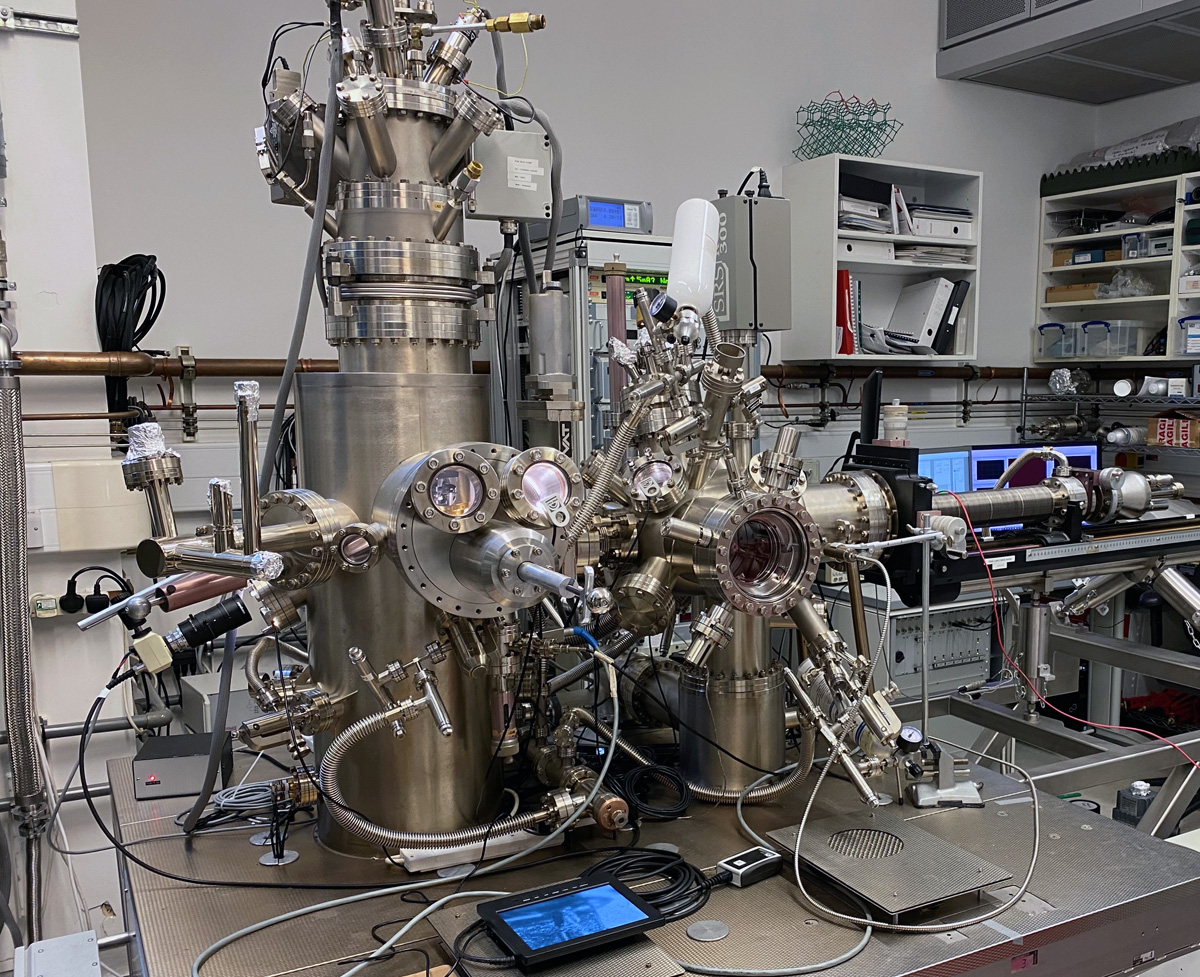
My first encounter with Omicron STM systems dates back to 1998, when I was an undergraduate at the University of Newcastle in Australia. My fourth-year research project was computational, focusing on the energetics of steps on the Si(001) surface (Phys. Rev. B 62, 10199 (2000)). At the same time, the department had recently acquired an Omicron variable-temperature STM. Although my own project did not involve STM directly, that early exposure influenced the direction of my subsequent PhD at the University of New South Wales, where an Omicron VT-STM had also recently been installed. Since then, Omicron instruments have been a constant presence through my graduate work, time spent in the Scanning Probe Microscopy Laboratory at Los Alamos National Laboratory, and for almost two decades now, here at UCL. Along the way, many students and postdocs in the group have learned STM on these systems, which still form the backbone of our research.
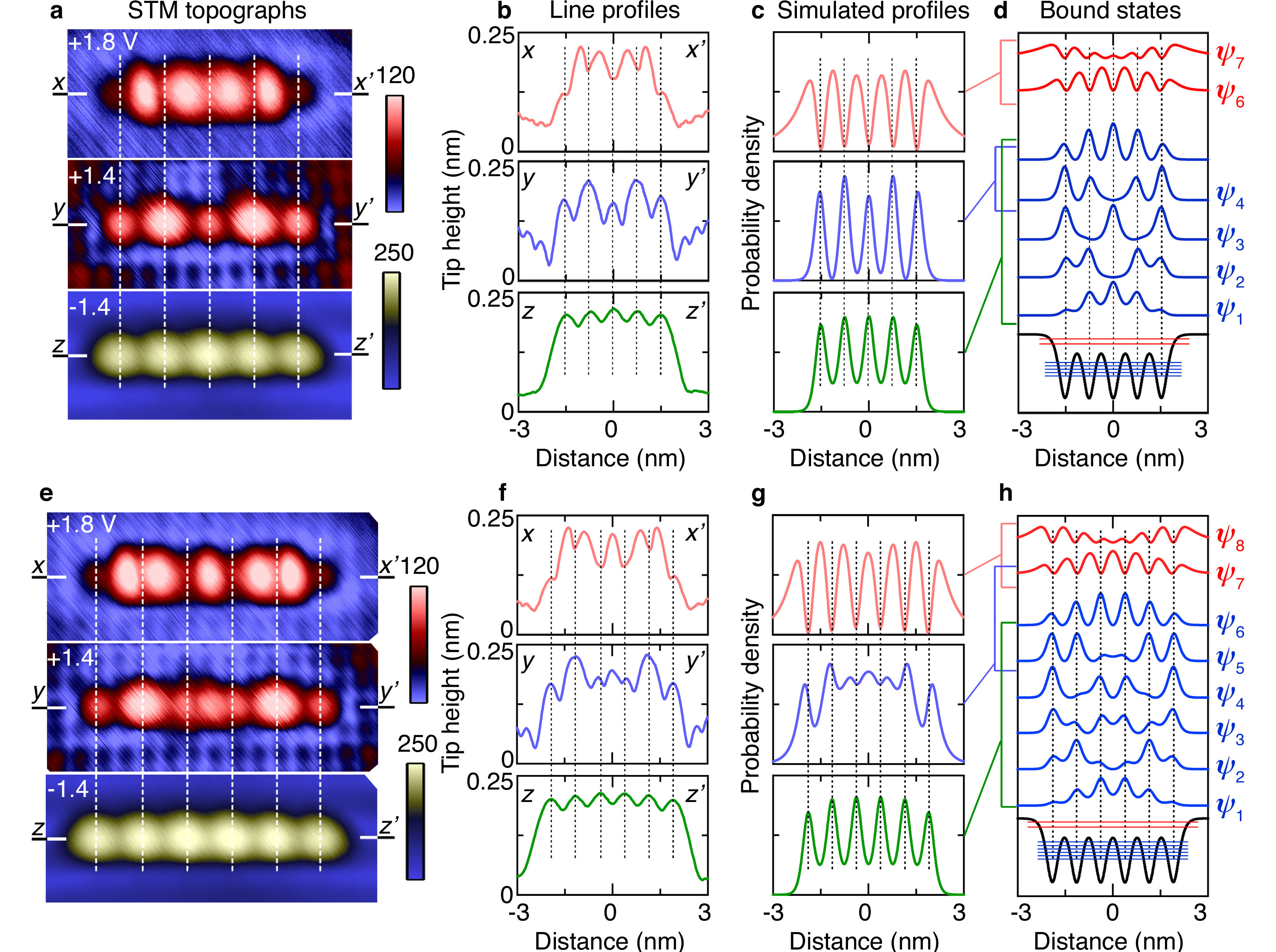
This is not the first time our work with Omicron systems has been highlighted like this. In 2013, our research was also featured as Result of the Month for a study centred on the deliberate fabrication and imaging of artificial quantum states formed from coupled dangling bonds on hydrogen-terminated Si(001), published in Nature Communications 4, 1649 (2013). That work focused on engineering designer quantum states at the surface. The current study, by contrast, probes the intrinsic quantum structure of individual hydrogenic acceptor states buried within the silicon lattice. Both studies resolved new quantum states seen in silicon for the first time and are connected by a shared experimental philosophy and the core focus of the group in creating and understanding atomic-scale quantum states in semiconductors.
We’re grateful that Scienta Omicron has chosen to highlight our research once more, and we’re looking forward to many exciting scientific discoveries yet to come.