Inside the Ring: Nine Years on the Swiss Light Source Proposal Review Committee
 Steven Schofield
This week I was at the Paul Scherrer Institut (PSI), about an hour outside Zurich, for what was my final in-person meeting with the Swiss Light Source (SLS) Proposal Review Committee (PRC).
I have been on the committee for nine years, having joined the soft x-ray sub-committee back in 2017. The role involves reviewing a set of beamtime proposals for beamlines covering soft X-ray spectroscopy and imaging, twice a year. Each committee member is allocated around 20 proposals to read, and each proposal is read by at least three committee members. We then meet in Switzerland, or these days also online, to discuss and rank the proposals over two days. Over the years I’ve read proposals spanning everything from topological spin textures and magnonic dynamics in novel magnetic materials, through electrochemical energy storage and heterogeneous catalysis, to advanced X-ray optics and even geological processes such as soil carbon cycling and natural hydrogen production. Inevitably, the standard is consistently high, with proposals developing new methods or pushing existing ones right to their limits. The challenge for the committee is that beamtime is always limited, and the task is therefore not only to identify the very strongest proposals, but also to allocate the available time in a way that enables as much high-quality science as possible to be carried out.
The rhythm of proposal reviews was disrupted by the pandemic in 2020, when everything moved online. A second change came in September 2023 when the SLS shut down to begin the SLS 2.0 upgrade, a major rebuild of the storage ring that will deliver x-ray beams of dramatically increased brightness. This week’s meeting marked the first full meeting, and the first in-person PRC of the SLS 2.0 era. It was also something of a farewell, since after nine years on the committee the SLS is now rotating membership to bring in new people and it was time for the current panel members to say goodbye. Our committee will meet once more in December of this year, but this will be our last and that will be held online.
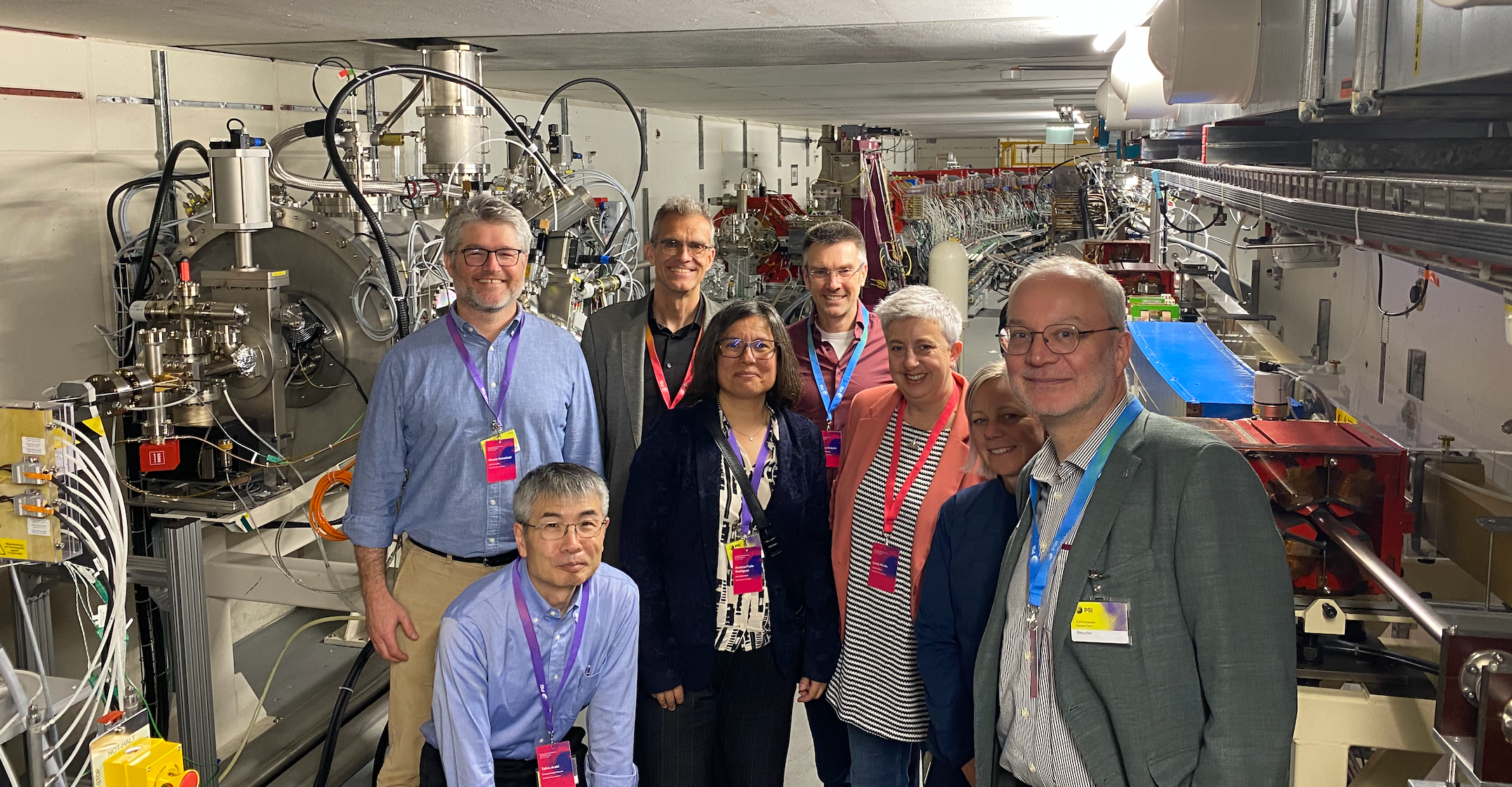
As part of the visit we were given a tour of the upgraded SLS 2.0 facility, including the rare privilege of entering the storage ring itself. The ring is housed inside a roughly circular concrete bunker with a circumference of 288 m, providing the radiation shielding needed for safe operation. Under normal circumstances access is extremely restricted and the interior is inaccessible whenever the machine is running. PSI kindly shut the machine down for the day to allow us inside, an opportunity that very few visitors ever get to experience.
Standing inside the ring, the sheer density of the infrastructure is striking. In addition to the rather small diameter vacuum tube that forms the storage ring itself, every metre is packed with magnets, vacuum pumps, power supplies, diagnostics equipment, cooling, and cabling, all engineered and aligned with extraordinary precision to guide the electron beam around the ring and generate the brilliant X-ray beams delivered to the beamlines. Even more astonishing, we learned that when occasionally they must regenerate the quality of the vacuum, the concrete top of the bunker can be simply lifted off with the in-built crane and the entire section of the vacuum storage ring removed, baked, then reinstalled. Even for someone used to working around large scientific facilities, it gives a tangible sense of the complexity and scale involved in operating a modern synchrotron light source.
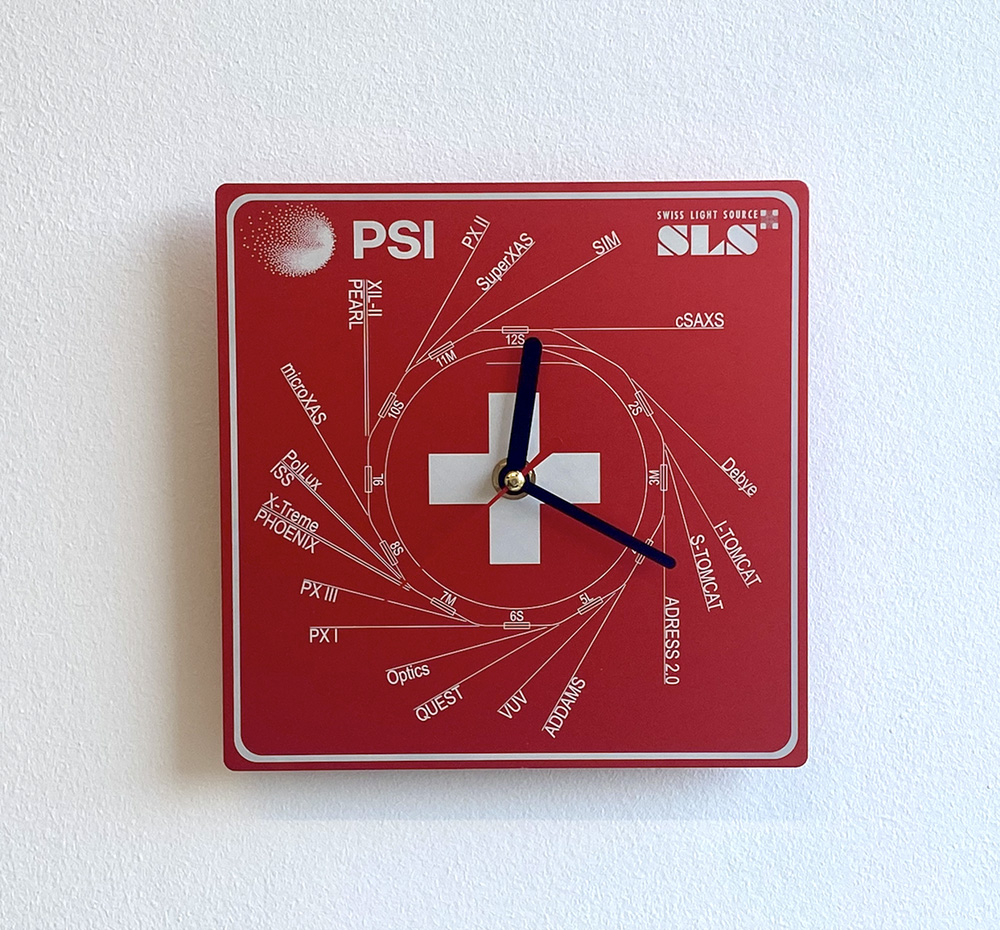
Part of our two-day meeting was an evening farewell dinner, where Professor Gabriel Aeppli, Director of Photon Science at PSI and a close personal collaborator, gave a warm speech acknowledging the outgoing committee members. It was a genuinely warm occasion, and a good opportunity to reflect on the breadth of science the committee has helped support over the years. We were each presented with a commemorative engraved metal clock featuring the layout of the SLS 2.0 beamlines, a fitting keepsake that now sits on my office wall.